Value Appreciation
Investing equity back into the property through high-yield upgrades ensures the loan principal is matched by an increase in market valuation. This creates a circular benefit for the homeowner's net worth.
Home Equity Lines of Credit (HELOC) represent more than just a credit facility; they are a strategic resource for long-term value creation. By focusing on sustainable financial practices, homeowners can leverage their property value to enhance environmental efficiency and secure their fiscal future.
Once a week we send a digest of the best articles.
Investing equity back into the property through high-yield upgrades ensures the loan principal is matched by an increase in market valuation. This creates a circular benefit for the homeowner's net worth.
Using HELOC funds for energy-efficient retrofitting reduces monthly utility overhead. These recurring savings can be redirected to accelerate the repayment of the credit line itself.
A responsibly managed line of credit serves as a non-volatile emergency reserve. It provides liquidity without the need to liquidate long-term investments during market downturns.
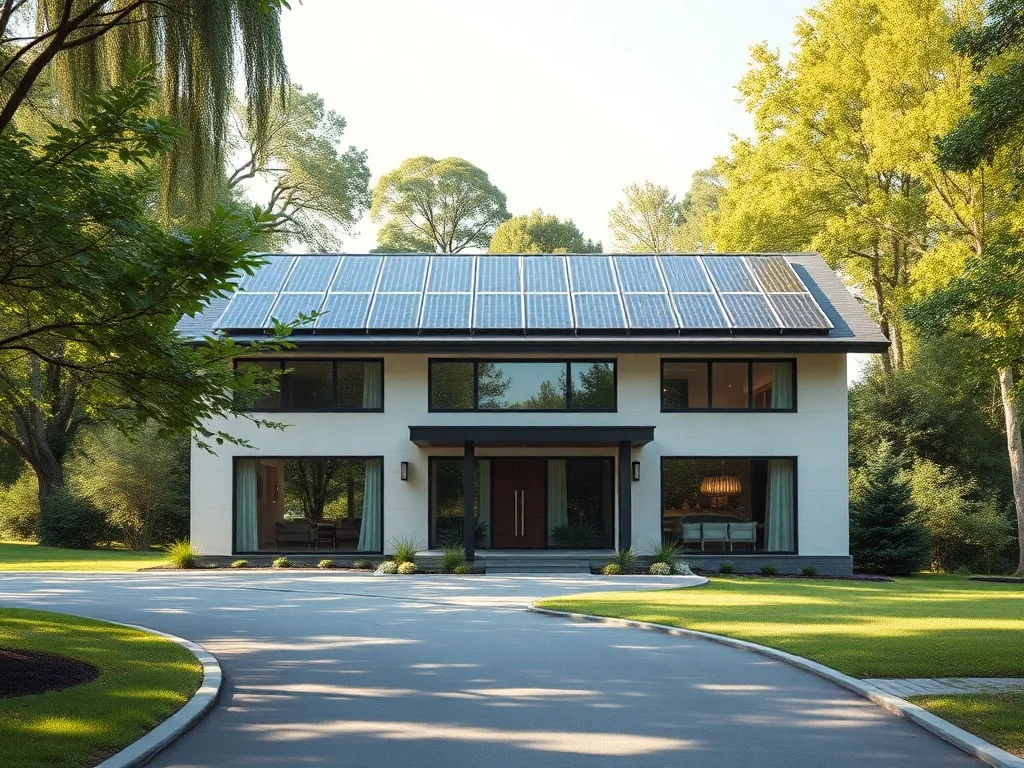
Transitioning to a sustainable household is a capital-intensive process that yields significant long-term dividends. By utilizing a HELOC for green renovations, homeowners can access the necessary capital to install solar arrays, high-efficiency heat pumps, and triple-pane insulation. These upgrades do more than lower carbon footprints; they align with modern building codes and increasing buyer demand for energy-independent homes.
Many regional programs offer rebates and tax credits for specific energy-saving measures. When integrated with a HELOC strategy, these incentives can effectively lower the net cost of borrowing. For instance, a homeowner might use their credit line to fund a $30,000 solar installation and then use the subsequent government rebate to pay down a portion of the HELOC balance immediately.
Using home equity to consolidate high-interest debt is a powerful tool for financial recovery, provided it is executed with discipline. Most credit cards carry interest rates exceeding 20%, whereas a HELOC typically offers rates significantly lower, often in the single digits or low teens. By transferring high-interest balances to a HELOC, a homeowner can drastically reduce the total interest paid over time.
Consolidating $25,000 in credit card debt (22% APR) into a HELOC (8% APR) can save over $3,500 in interest payments annually, allowing the principal to be retired much faster.
However, this strategy requires a commitment to not accrue new debt on the cleared cards. For a deeper understanding of how property values impact your borrowing power, consult our Property Appraisal and LTV guide.

A common misconception is that a HELOC should replace a traditional cash emergency fund. In a responsible financial framework, the HELOC acts as a secondary layer of liquidity. While cash reserves should cover 3-6 months of essential living expenses, the HELOC can be reserved for major unforeseen property repairs or significant medical costs that exceed the cash buffer.
Immediate access for daily needs, groceries, and minor emergencies. Zero risk of market fluctuations.
Large-scale capital needs. Preserves your investment portfolio from forced liquidation during low cycles.
Maintaining this balance ensures that you are never forced to make desperate financial decisions. Learn more about maintaining this balance in our Equity Management Articles.
Avoid borrowing the maximum amount allowed. Keeping your combined loan-to-value (CLTV) ratio below 70% provides a safety margin in case of property market corrections, ensuring you don't end up with negative equity.
Since HELOCs often feature variable rates, calculate your monthly payments based on a rate 2-3% higher than the current offer. If your budget cannot sustain the higher payment, consider a smaller credit line or a fixed-rate portion.
During the draw period, many lenders only require interest-only payments. A responsible user makes voluntary principal payments to ensure the balance is decreasing, rather than waiting for the repayment period to begin.
| Upgrade Type | Estimated Cost | Value ROI |
|---|---|---|
| Solar Panel Installation | $15,000 - $25,000 | High (Energy Savings) |
| Kitchen Modernization | $20,000 - $50,000 | Extreme (Market Value) |
| Attic Insulation & Sealing | $2,500 - $5,000 | Medium (Utility Savings) |
| Smart Irrigation System | $1,500 - $3,500 | Low (Eco-Impact) |
"We used our equity to install a geothermal heat pump. The process was straightforward, and our monthly energy bills dropped by 40%. It was the most responsible way to use our home's value." — Robert M., Homeowner
"Consolidating our high-interest debt through Wooden Receipt's guidance saved us thousands. We now have a clear path to being debt-free within three years." — Sarah L., Financial Planner
Review our qualification criteria to see how much equity you can access for your next sustainable project.
Check Qualification